Why the Discharge Point Matters
A sump pump collects groundwater that would otherwise push into the basement and pumps it out. If the discharge pipe ends a few feet from the foundation, that water soaks right back into the backfill around the house and drains straight back to the pit. The pump is not keeping the basement dry, it is running the same water in a loop. That shows up as a pump that cycles constantly during wet weather, wears out years early, and is more likely to quit on the night you need it most.
The fix is getting the water far enough away, onto ground that slopes away from the house, so it actually leaves the system. That is the same principle behind every grading fix in our regrading warning signs post.
What Happens to a Discharge Line in Winter?
This is the part people do not see coming. Between pump cycles, some water stays in the discharge line. If the line runs flat, sags, or sits exposed on the surface, that water freezes. A frozen line is a blocked line, and a sump pump pushing into a blocked line cannot empty the pit. During a January thaw or a winter rain, the pit fills, the water has nowhere to go, and it comes up into the basement.
Common setups that freeze:
- Flexible hoses laid across the lawn. Cheap, easy, and the first thing to freeze solid.
- Buried lines with no pitch. If the pipe does not drain completely after each cycle, there is always water sitting in it.
- Lines that dip into low spots. Every sag is a place for water to collect and freeze.
- Outlets that dump onto frozen ground. The water cannot soak in, so it sheets across the surface, freezes, and builds an ice dam right at the outlet.
Where Is Sump Water Not Allowed to Go?
Before picking a fix, it helps to know what is off the table in New Jersey:
- The sanitary sewer. NJDEP and municipal codes prohibit connecting sump pumps, roof drains, and foundation drains to it. All that clean water surcharges the sewer during storms, which can overflow manholes and back sewage into homes. Towns actively hunt down these connections.
- A neighbor’s property. Discharge has to stay on your own lot. Pushing water onto a neighbor is the kind of thing that turns into a civil dispute.
- The street, in many towns. Some municipalities now bar street discharge on new construction, and many ask homeowners to move discharge off the road in winter because it freezes into an icing hazard for drivers. Check your town before routing a line to the curb.
What Is the Right Fix?
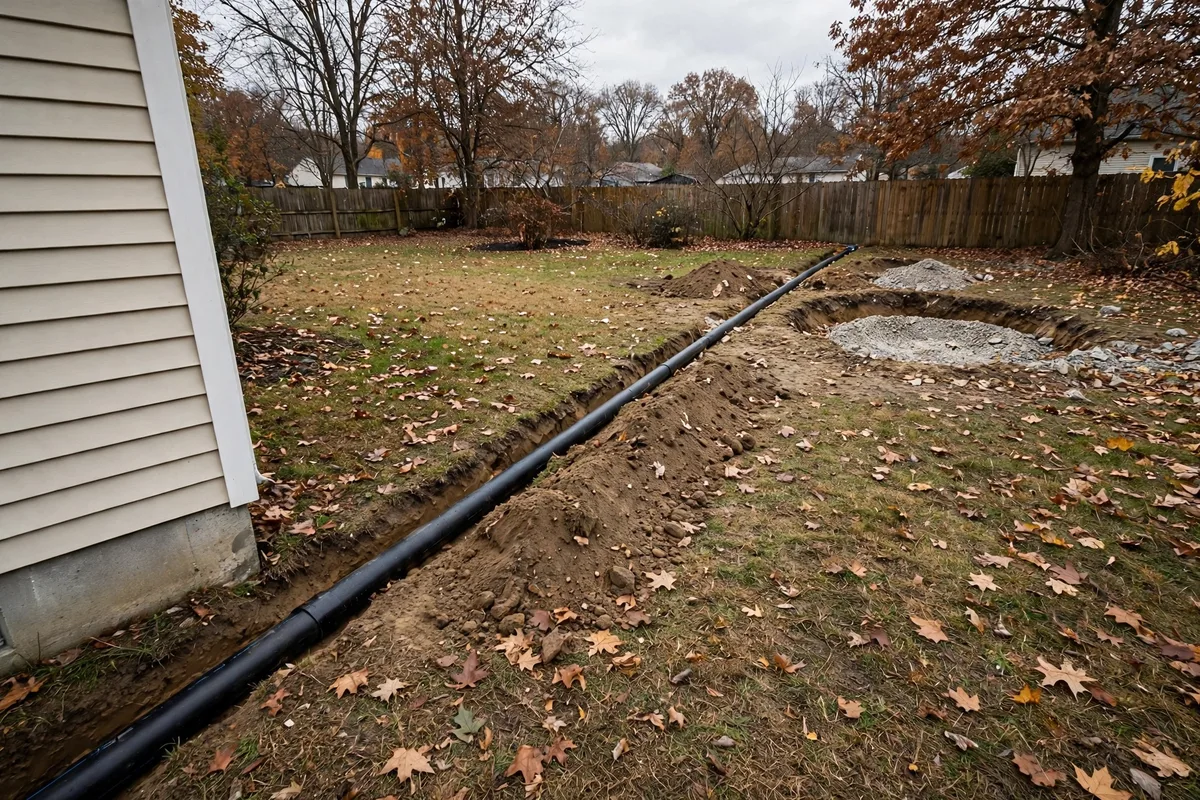
For most Central NJ properties, the durable answer is getting the discharge underground and getting it to drain:
- A buried discharge line pitched to drain. Solid pipe, buried, with continuous slope from the house to the outlet so it empties after every cycle and has no standing water to freeze.
- An outlet that can take the water. Often that is a dry well set well away from the house, where the water disperses into the soil below the frozen surface. Our French drain vs dry well post covers when a dry well works, and when the soil will not let it.
- Grading at the outlet. Wherever the water comes out, the ground there has to carry it away from the house and off the neighbor’s side of the line.
Dry wells typically run $1,500 to $5,000 in Central NJ depending on size and soil. Compare that to cleaning up a flooded finished basement, and it is one of the better returns in residential drainage work.
Do It Before the Ground Freezes
Trenching and burying a discharge line is fall work. Once the ground freezes, excavation gets slower and more expensive, and the line you need is the one that is already in the ground when the first freeze hits. This fits right alongside the rest of the late fall checklist in our leaf season drainage post.
Mannino Excavation installs buried discharge lines, dry wells, and the grading that makes them work across Monmouth, Middlesex, and Ocean County. (908) 670-7297, free assessments.
Frequently Asked Questions
How far should a sump pump discharge from the house?
Far enough that the water does not run back toward the foundation. Many towns, including Hillsborough, simply ask that discharge end well into the yard on your own property so it can soak in before reaching a neighbor. In practice that usually means extending the line well beyond the foundation backfill and onto ground that slopes away from the house.
Can I connect my sump pump to the sanitary sewer in NJ?
No. NJDEP and municipal codes prohibit connecting sump pumps, roof drains, and foundation drains to the sanitary sewer. That clean water overloads the sewer system during storms, which can cause manhole overflows and sewage backups into homes. Towns actively look for and remove these connections, so it is not a safe shortcut.
Why does a sump pump discharge line freeze?
Water sits in the line between pump cycles. If the line runs flat, dips, or sits above the frost line, that standing water freezes and blocks it. Once the line is blocked the pump runs against a closed pipe and cannot clear the pit. Lines pitched to drain completely, or buried and routed below frost, avoid the problem.
Can a sump pump drain into a dry well?
Yes, and it is one of the most reliable winter options. A buried line carries the water to a dry well set away from the house, where it disperses into the soil below the frozen surface. It only works in soil that absorbs water, so soil conditions should be checked first. In heavy clay a different outlet may be needed.
Is it legal to pump sump water into the street in NJ?
It depends on the town, and the trend is toward restricting it. Some towns bar street discharge for new construction while grandfathering existing setups, and many ask homeowners to move discharge off the roadway in winter because it freezes into an icing hazard. Check your municipality before routing a line to the curb.