Where Leaves Actually Cause the Damage
People think of leaves as a lawn chore. Your drainage system thinks of them as a slow shutdown, working from the top down:
- Gutters and downspouts. The first casualty. A gutter full of leaves stops moving water sideways, so it spills over the edge in sheets, right along the foundation line. A clogged downspout is worse: the water that does collect gets released at one overflowing joint instead of discharging where the system was designed to send it.
- Catch basin grates and inlets. One good windy rain can mat a grate shut in an afternoon. A covered inlet means the water that was supposed to go underground now travels overland, and overland water follows the slope, not the plan.
- Swales. A swale full of leaf litter is a swale with a false bottom. Water slows, spreads, and soaks in where it was supposed to keep moving, which is how the soggy strip along the property line comes back every spring.
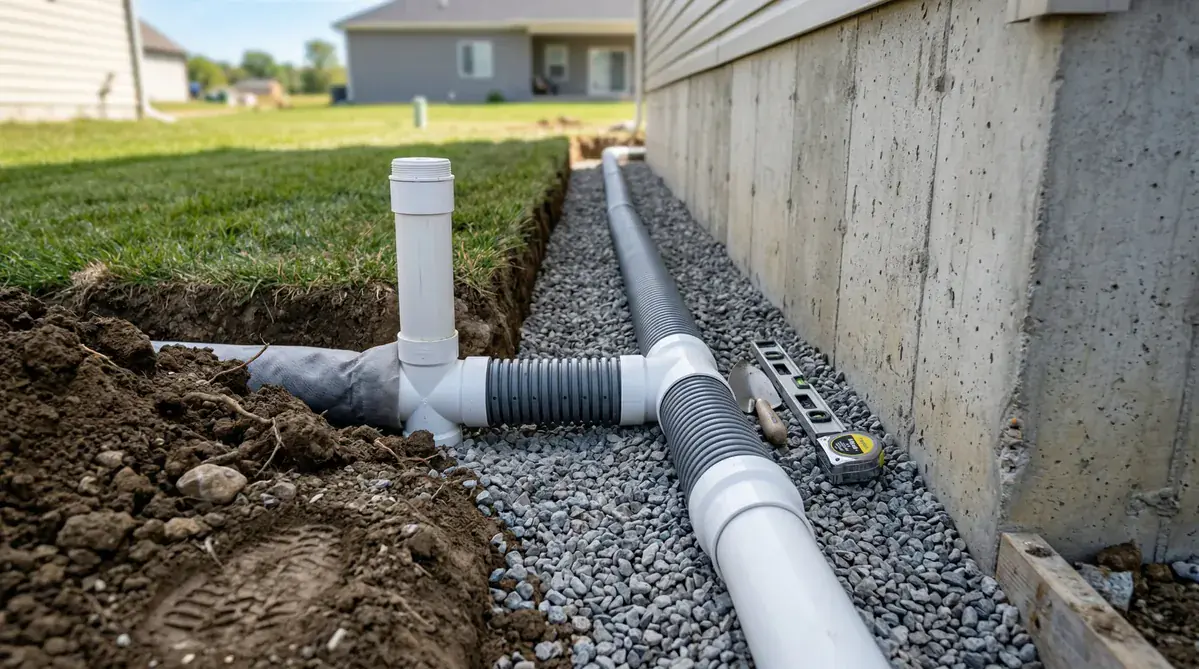
- French drain and dry well surface feeds. Systems that take surface water through gravel or inlet boxes clog gradually as leaf litter breaks down into fine debris. This is the slow version of the problem: the system loses capacity a little each fall, and a few years in, it fails during the first real storm and everyone wonders why.
Why This Matters More in November Than October
The timing is what makes leaf season a drainage problem instead of a cosmetic one. Leaf drop finishes right as NJ enters its late fall rain pattern, and whatever is clogged when those multi-day rains arrive stays clogged through them. Then winter locks it in: frozen leaf mats do not move until March, which means a drainage system that went into December compromised spends the entire snow melt season compromised. The wet basement shows up in spring, but the cause happened in November.
The October Fix: A Short Maintenance List
None of this requires a contractor if you catch it early. The list is short:
- Clear gutters and confirm downspouts actually flow, once after the main drop and once after the stragglers. Two passes beats one late one.
- Pull leaf mats off every catch basin grate and drain inlet you can find. If you do not know where your inlets are, that is worth learning before they disappear under snow.
- Rake the swales and low drainage paths, not just the lawn. The goal is bare flow lines, not a spotless yard.
- Watch one hard rain from the window. Water tells you the truth: anywhere it sheets, pools, or jumps its path is on next year's fix list.
When It Is Already Past Maintenance
If gutters are clear but water still pools, if the ground stays soggy days after rain, or if a French drain that used to work has quietly stopped, the problem is in the system, not the leaves. Silted drains, settled grading, and undersized dry wells all show themselves in exactly this season. Typical Central NJ fixes run $2,000 to $8,000 for a French drain, $1,500 to $5,000 for a dry well, and $2,500 to $10,000 for regrading, and fall installation means the system is working before spring melt. The full decision logic is in our French drain vs dry well post, and the warning signs that point to grading instead are covered in signs you need regrading.
Get It Looked At Before the Ground Freezes
A drainage assessment in October gives you options: fix it now, or plan it for spring with real information. An assessment in February gives you a diagnosis of why the basement is wet. Mannino Excavation assesses and builds drainage across Monmouth, Middlesex, and Ocean County. (908) 670-7297, free estimates.