Why Late August Is the Deadline, Not the Warning
Atlantic storm season peaks from late August through October, and in Central NJ that means two kinds of weather: tropical remnants that drop several inches of rain in 24 hours, and early nor'easters that grind away for two or three days straight. Neither is rare. Both put more water on your property, faster, than anything the rest of the year throws at it.
The problem is scheduling. Drainage work booked in September happens before the storms. Drainage work booked the week after a flooded basement happens whenever the contractor can fit you in. Along with everyone else who flooded in the same storm. Every fall we take those calls, and every fall the honest answer to some of them is "we can assess it now, but the fix is weeks out." The property owners who called in August or September don't have that problem.
What Does Storm Season Actually Do to a NJ Property?
A summer thunderstorm dumps water and moves on. A fall storm system saturates the ground first, then keeps raining. Once soil is saturated, every additional inch runs across the surface instead of soaking in. Straight toward whatever is downhill. If that's your foundation, it's in the basement. If it's your septic field, the system backs up. If it's your neighbor's newly regraded yard, it's now your problem twice over.
That's why properties that "never had a water problem" develop one in October. The drainage wasn't good. It was just never tested at saturation. Storm season is the test.
How Do I Know If My Property Is Ready?
Walk the property after the next decent rain and check four things:
- Slope at the foundation. Soil should visibly fall away from the house on every side. If any section is flat or pitches back toward the wall, that's where water will sit against your foundation in a multi-day storm.
- Downspout discharge. Follow every downspout to where the water actually ends up. Discharging at the foundation, into a flowerbed against the house, or into a buried pipe you've never verified is a problem waiting for volume.
- Existing drains. If you have a French drain or dry well, confirm it still flows. Systems installed decades ago silt up and quietly stop working. You find out during the storm.
- Last year's low spots. Anywhere water stood for more than a day after last fall's storms will hold more this year. Soil compaction and settling only make low spots lower.
What Should I Fix First?
If the list above turned up more than one issue, fix them in this order:
1. Grading at the foundation. Nothing else matters if soil pitches toward the house. Re-establishing positive slope is the highest-leverage fix on the property, and it's what makes every other drainage component work as designed. See the full breakdown in our post on regrading warning signs.
2. Downspout discharge. A roof concentrates thousands of gallons per storm into four to six discharge points. Extending those away from the foundation (to daylight, a swale, or a dry well) is often the cheapest meaningful fix on this list.
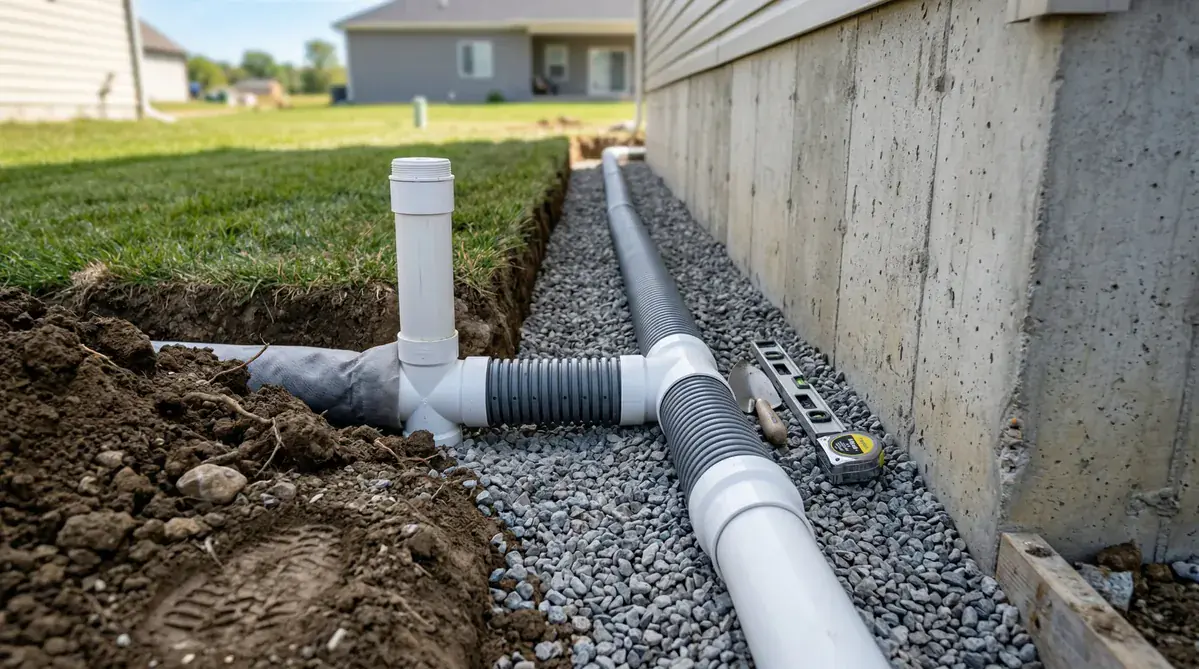
3. French drains and dry wells. Once surface water is handled, subsurface systems deal with what's left. Which one your property needs depends on whether the problem is moving water or concentrated water. We cover the difference in French drain vs dry well.
What Does Pre-Storm Drainage Work Cost?
Typical Central NJ ranges, consistent with what we quote all year: downspout extension and discharge work sits at the low end, French drains run $2,000 to $8,000 depending on length and depth, dry wells $1,500 to $5,000, and regrading $2,500 to $10,000 for most properties. There is no storm-season premium for booking ahead. The premium is what you pay by waiting.
Compare that to the other side of the ledger: a regrade plus foundation crack repair after years of water exposure runs $10,000 to $25,000, and a regrade plus full waterproofing and basement remediation runs $20,000 to $50,000. Water damage doesn't wait for a convenient time, and insurance frequently excludes exactly this kind of surface-water intrusion.
Which Central NJ Towns Get Hit Hardest?
Storm exposure isn't even across our service area. Brick and Toms River take coastal storms head-on: drainage, regrading, and bulkhead-adjacent work run heavy there from late August on. Old Bridge catches more storm damage than most inland towns, and post-nor'easter recovery there regularly means regrading and drainage repair. Around Matawan, work near the creek adds stormwater management and sediment control to the picture. Inland towns aren't exempt, because saturation flooding is about your lot's drainage, not your distance from the coast.
Get Ahead of It
September work happens before the storm. November work happens after it, usually alongside a remediation bill. If any of the four checks above failed at your property, now is the cheap time to deal with it. (908) 670-7297. Free drainage assessments across Monmouth, Middlesex, and Ocean County.