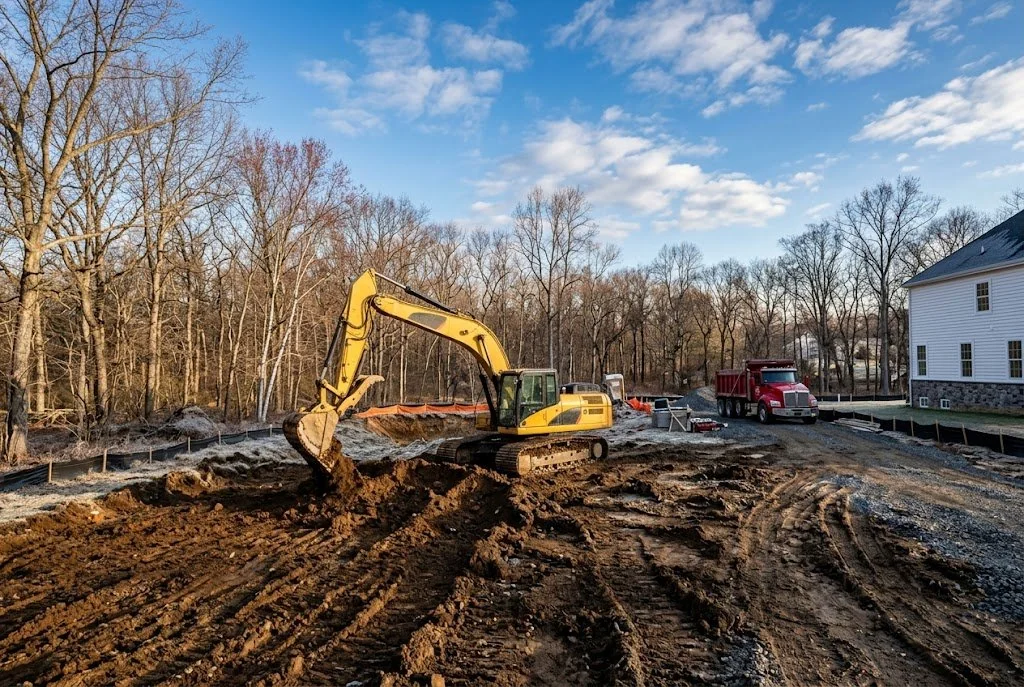
The Frost Just Came Out of the Ground
By late April in Central NJ, frost depth has receded back to the surface. We can dig clean, the soil holds shape, equipment isn't sliding around in spring mud anymore, and the days are long enough to put in real work hours. That window of "perfect dig conditions" is roughly seven months wide — late April through November — and we're at the front edge of it.
Compare that to mid-January when we're trying to break frozen ground that's harder than concrete in the top 18 inches, or late July when the schedule is so booked that getting a quote turns into a four-week wait, or November when we're racing daylight to backfill before the next freeze. Spring is the only season where everything is genuinely on your side.
Why Spring Pricing Tends to Be Better
This isn't universal, but it's a real pattern. April-May projects often quote at the lower end of the range because:
- Equipment is freshly maintained. Most excavators do major service on machines over winter. Spring jobs run on equipment in peak condition, which means fewer downtime delays that would otherwise push timelines.
- Crew is fully assembled. Seasonal crew that left for winter work is back. We're not subbing things out to keep up with summer demand.
- Soil conditions are predictable. Spring soil moisture is workable. Mid-summer can hit dry, dusty conditions that require water trucks. Fall can hit weeks of rain that delays everything. Spring sits in the sweet spot.
- Less rush-fee pressure. By July, every contractor in NJ is fully booked and quotes carry implicit "if you need it fast" surcharges. Spring quotes don't have that built in.
The Calendar Math Most People Miss
If you want a project finished by a specific date, you need to count backwards. Here's what typical residential excavation timelines actually look like in NJ:
- Quote and on-site assessment: 3-7 days from initial call
- Permits (if applicable): 2-6 weeks depending on township
- Scheduling on the calendar: 2-8 weeks during peak season
- Excavation work itself: 1 day to 3 weeks depending on scope
- Inspection and follow-on work: 1-3 weeks for foundation, septic, etc.
Add it up. A homeowner who calls us on May 1 wanting a foundation dig done "before summer" is in a fine spot — we can hit June 15 most years. A homeowner who calls July 15 wanting the same job done "before fall" is going to be disappointed. Either we don't have the schedule, or the permits take us into October, or both.
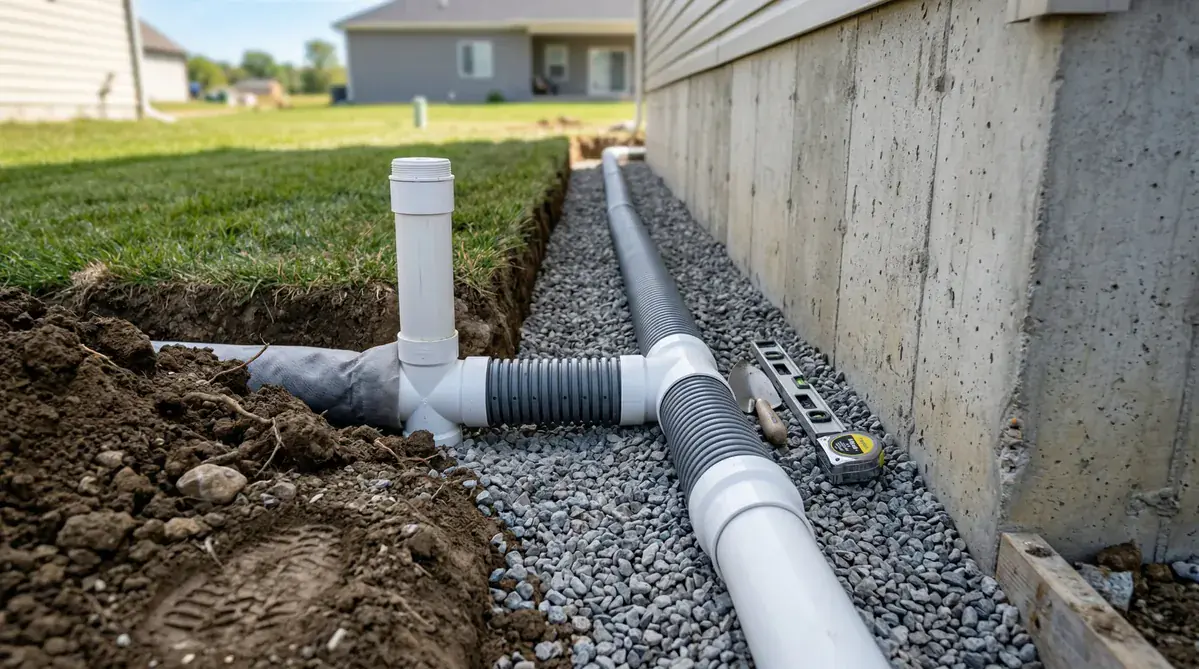
Spring Is When Drainage Problems Make Themselves Visible
Every spring after the snow melts and the rains hit, drainage problems on residential properties become impossible to ignore. The standing water in the side yard. The water pooling at the foundation. The basement that smells like a wet sock for three weeks straight.
This is the right moment to address those problems for two reasons. First, you can actually see exactly where the water is going (unlike in mid-summer when everything is dry and the problem isn't visible). Second, you've still got time to install a fix and have it tested by a real rain event before next winter.
French drains and dry wells installed in May and June get plenty of summer thunderstorms to validate the drainage path. Installations in October don't get that test until next April.
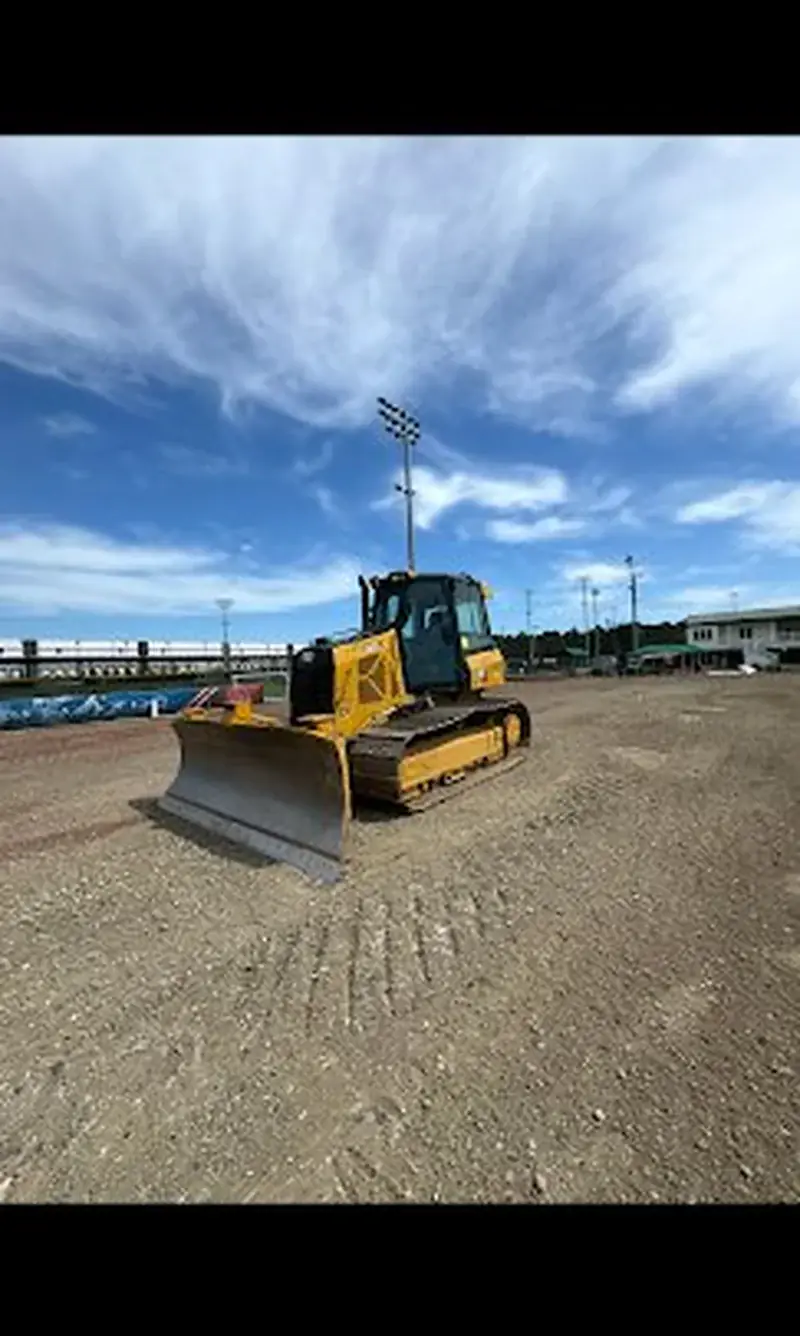
Foundation Work — The Sequencing Argument
If you're building a new home or addition this year, the foundation dig is typically the project that anchors the entire schedule. Everything downstream — framing, mechanical rough-in, drywall, finish work — waits on the foundation being done and inspected.
Get the dig done in May, you have all of June through October for the build. Wait on the dig until July, you're framing in August, finishing in November, and praying the building isn't a punch list of "we'll get to it next spring" items by Thanksgiving.
Custom home schedules in NJ are usually 6-9 months from groundbreak to occupancy. That math only works if groundbreak happens in spring.
Septic Installations and Replacements
Septic systems are particularly time-sensitive because they involve permits, perc tests, and inspections that all have their own clocks. If your existing septic is showing warning signs, replacement done in spring lets us:
- Run perc tests on workable spring soil (rather than frozen winter ground or summer-dry hardpan)
- Get permits processed without summer's permit office backlog
- Install and inspect well before the heavy fall rain that strains failing septic systems most
Demolition Projects
Spring is also peak season for residential demolition — sheds, garages, in-ground pools, old foundations, outbuildings. Frozen ground in winter and saturated ground in early spring make demo unsafe. Late April through June is the window where demolition is straightforward and disposal facilities aren't backed up.
If you've been thinking about demoing something, this is the season to do it.
Land Clearing and Site Prep
Same logic applies to land clearing. Spring is the cleanest window — we can see what we're working with after winter dieback but before full leaf-out, ground is workable for stump removal, and disposal sites have capacity before the summer landscape industry crush.
If you're prepping a lot for any kind of construction this year, getting clearing done in May or June lets the cleared lot rest and stabilize before excavation starts. That's actually preferable for grading purposes anyway.
What "Right Time" Means in Practice
If your project is anywhere from "I want to talk about it" to "I'm ready to break ground tomorrow," the right time to start the conversation is the same: now. The conversation costs nothing. The on-site visit costs nothing. The quote costs nothing. What costs you is waiting until the calendar fills up and pushing your start date into July, August, or September.
Frank runs every estimate himself. We can typically get out for a property visit within a week of your call. From there, we work with your timeline — but having the quote in hand and the project on our radar means we save you a slot when you're ready to commit.
The Brief Window Before Summer Lock-In
By mid-June every year, our calendar tightens significantly. The combination of permit-aware homeowners who started in February and reactive homeowners who hit panic mode after Memorial Day fills schedules through August. We do our best to fit everyone in, but the reality is that a job confirmed in late April starts when you want it to start. A job confirmed in mid-July starts when we have the slot.
If you've been thinking about excavation, foundation, septic, drainage, demolition, or grading work for this year — this is the call. (908) 670-7297. Free estimates anywhere in Jackson, Freehold, Howell, Manalapan, and the rest of Central NJ.