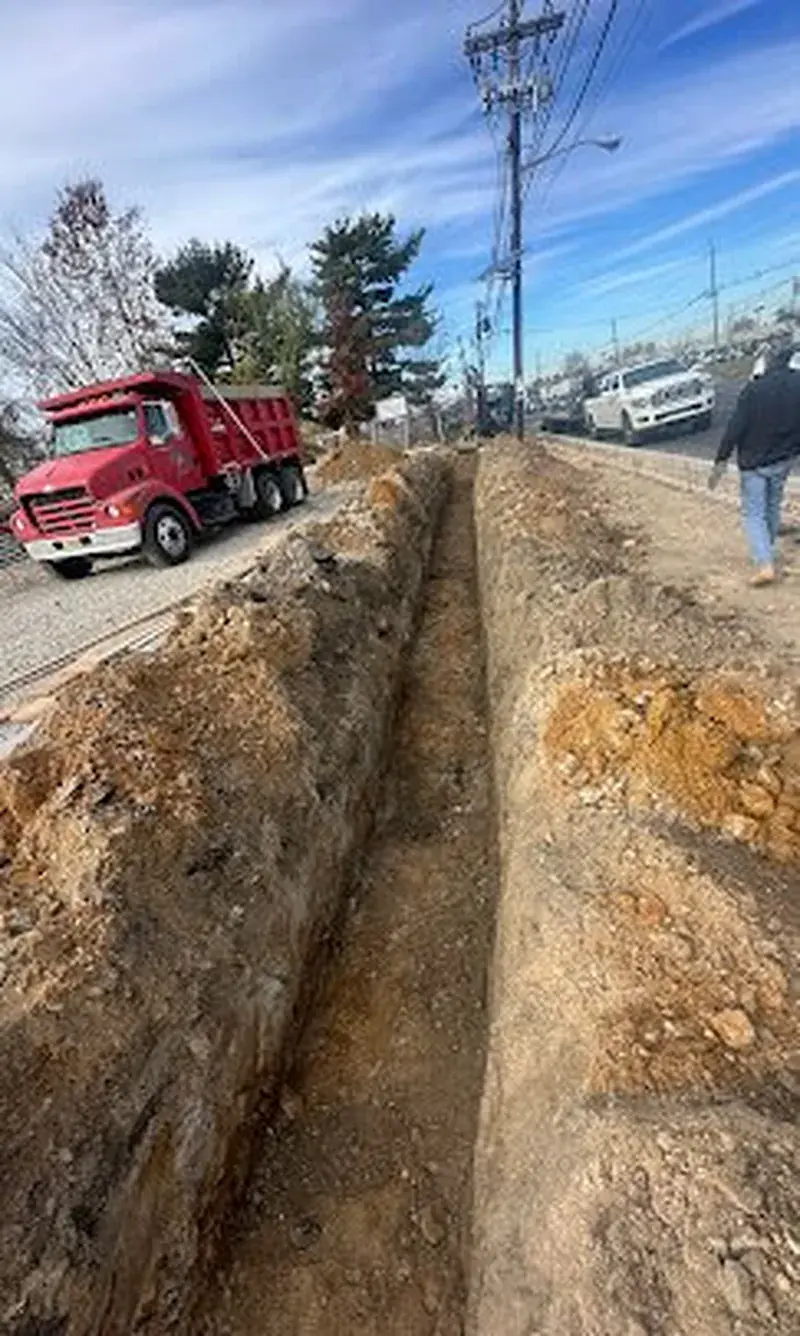
Call 811. Then Call Someone Else.
New Jersey law requires you to call 811 at least three business days before any excavation. The utility companies come out and mark their lines — gas, electric, water, sewer, cable, phone. It's free, it's required, and it prevents you from hitting a gas line with an excavator bucket. Do it every time.
But 811 only marks public utility lines — the ones owned by the utility company, typically running from the street to your meter or connection point. Everything on your side of the meter is your responsibility. And that's where things get missed.
What 811 Doesn't Mark
Private water lines. The line from your well to your house (if you're on well water) is not a public utility. 811 won't mark it. Hit it with a backhoe and you're without water until a plumber replaces it.
Septic system components. The pipe from your house to the tank, the tank itself, the distribution box, and the leach field pipes — none of these are public utilities. If you're doing any excavation on a property with a septic system, you need to know where every component is before you dig.
Irrigation systems. Sprinkler lines, drip lines, valve boxes, and supply lines are all underground and invisible. They're typically shallow (6-12 inches), which means any grading work can cut them.
Low-voltage wiring. Landscape lighting cables, security system wiring, outdoor audio cables, invisible fence wire. All underground, all easy to cut, all expensive to troubleshoot and repair after the fact.
Old abandoned lines. Decommissioned fuel oil tanks and their supply lines. Abandoned cisterns. Old dry wells. Cast iron sewer pipes that were replaced but never removed. These are the surprises that cause real problems — especially old fuel tanks, which can trigger environmental remediation requirements.
How to Find What 811 Misses
Private utility locator. Companies that specialize in GPR (ground-penetrating radar) and electromagnetic locating. They can find metallic and non-metallic underground features — pipes, tanks, cables, voids. Cost is typically $300-$600 for a residential property. Worth every penny if you're doing significant excavation.
Your records. The septic system should have a permit on file with the county health department, including a layout map. Your well should have a driller's log. Irrigation systems usually have as-built drawings from the installer. Dig these out before the excavation starts.
Your neighbors' memory. Especially on older properties — the neighbor who's lived there for 30 years might remember the old oil tank that was decommissioned in 1998 or the cistern that was filled in when public water came through.
What Hitting a Line Actually Costs
- Gas line: Stop work, evacuate, fire department responds, utility company repairs. You're liable for the repair cost plus any fire department charges. A damaged gas line can be $2,000-$10,000+, and the project stops for days.
- Water main: Flooding, immediate loss of water, utility repair bill. $1,000-$5,000.
- Private well line: No water until repaired. Plumber emergency call + pipe replacement. $500-$2,000.
- Septic line: Sewage release, health department involvement, repair and possible system evaluation. $1,000-$5,000+.
- Fiber optic: These are expensive. A single cut fiber optic line can cost $5,000-$20,000 to repair, and the utility company will come after you for it.
The $300-$600 for a private locator is the cheapest insurance you'll ever buy.
Our Process
Before any dig, Frank verifies that 811 has been called and marks are in place. On properties with known complexities — septic systems, wells, extensive landscaping — he'll recommend a private locate if one hasn't been done. We'd rather spend an extra day confirming what's underground than spend a week fixing what we hit.
Call (908) 670-7297 to discuss your project.