How Septic Systems Work (Quick Refresher)
A typical residential septic system has two main parts:
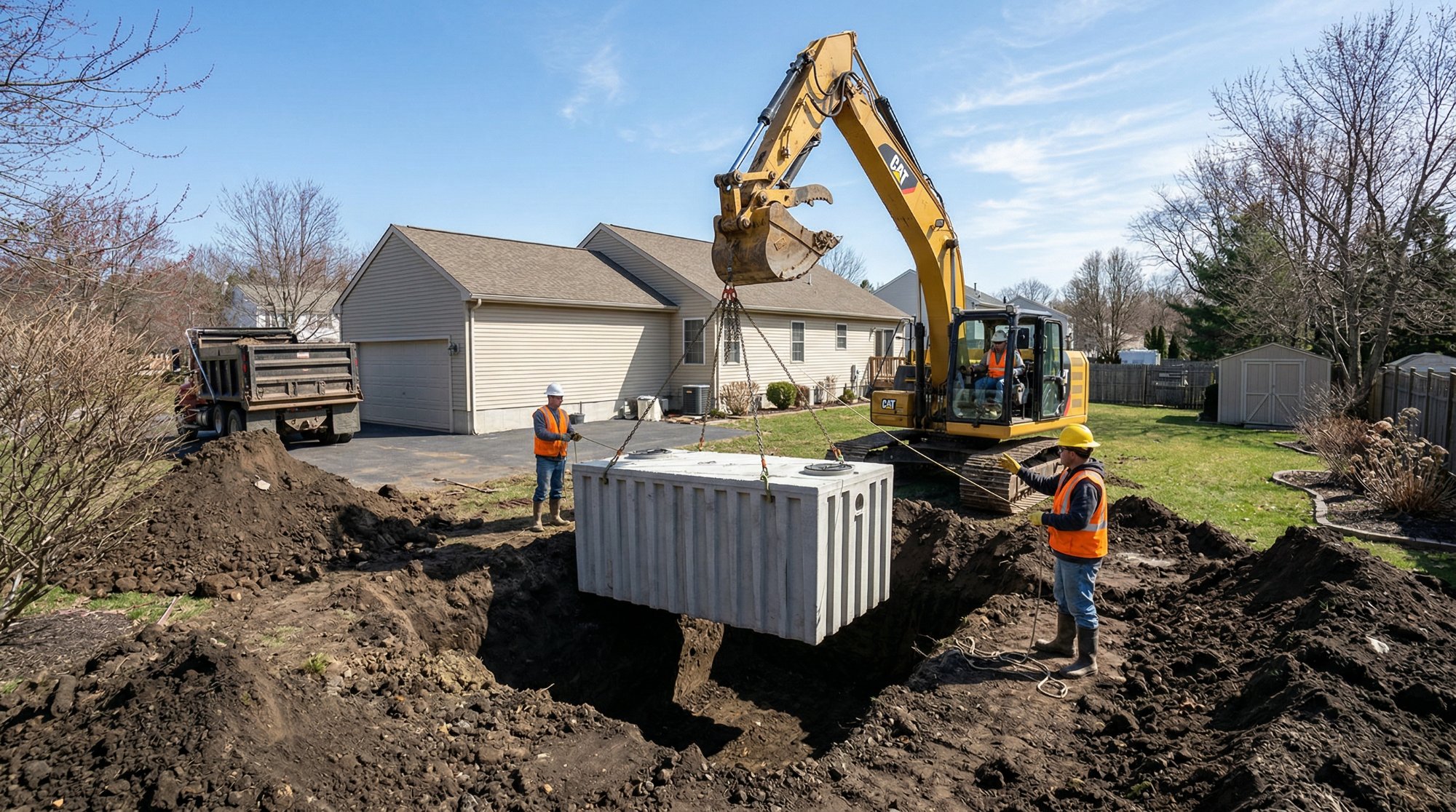
- The tank — a large buried container (typically 1,000–1,500 gallons) where solids settle and bacteria break down waste
- The leach field (also called drain field or absorption field) — a network of perforated pipes in gravel beds where partially treated wastewater slowly percolates into the soil
Both parts can fail, and they fail in different ways. Knowing which one is failing changes the repair scope significantly.
Early Warning Signs (Months Before Failure)
Slow Drains Throughout the House
If multiple drains in the house are slow at the same time — not just one bathroom — the issue is likely the septic system, not a clogged pipe. A single slow drain is a clog. Multiple slow drains is a system problem.
Gurgling Sounds in Drains or Toilets
Air being forced through standing water in drain lines makes a distinctive gurgling sound. This usually means the system is starting to back up — water is hitting blockages or full tanks and air is finding its way back through the lines.
Sewage Smells Outdoors
A faint sewage odor near the tank or leach field area, especially after rain or in warm weather, is an early indicator. Healthy systems shouldn't smell. The smell usually means either a tank that needs pumping or a leach field that's starting to surface.
Greener, Lusher Grass Over the Leach Field
Slightly greener grass in spots over the leach field is normal. Significantly greener, faster-growing, or wetter grass means too much wastewater is reaching the surface — usually because the leach field is overloaded or starting to fail.
Mid-Stage Warning Signs (Weeks to Months Before Failure)
Standing Water or Wet Spots Over the Leach Field
Once you see actual water pooling or persistent muddy spots over the leach field, the system is in active failure. The leach field can no longer absorb the volume coming in.
Sewage Backing Up Into the Lowest Drains
When sewage starts coming back up through floor drains, basement showers, or laundry tubs, you're at the point of system failure. Stop using water in the house and call.
Strong, Persistent Sewage Odors Indoors
Sewer gases finding their way back into the house through dry traps or compromised vent systems indicate the system is no longer flowing properly.
High Nitrate Levels in Well Water
If you have a well and routine water testing shows rising nitrate levels, your septic might be the source. Failing leach fields can contaminate nearby groundwater.
Late-Stage / Emergency Signs
Sewage Surfacing in the Yard
Visible sewage on the lawn means the leach field has failed completely. This is also a public health issue — exposed sewage is a hazard to children, pets, and anyone walking through the yard.
Toilets That Won't Flush
When the system is fully backed up, toilets simply won't drain. Plunging won't help because the issue isn't a single clog — it's the entire system.
Multiple Plumbing Fixtures All Backing Up
Same as above. Once you're seeing system-wide backup, the problem is downstream of all your fixtures.
What Causes Septic Failure
- Lack of maintenance. Not pumping the tank every 3–5 years lets solids accumulate, which eventually flow into the leach field and clog it permanently.
- Hydraulic overload. Using more water than the system was designed for (extra-large household, leaking fixtures, simultaneous heavy use) can flood the leach field.
- Inappropriate disposal. Flushing wipes (even "flushable"), grease down drains, harsh chemicals, and excessive antibacterial cleaning products all damage the bacterial action that makes septic systems work.
- Driving over leach fields. Compaction crushes the gravel and pipes, reducing absorption capacity.
- Tree roots. Roots seeking moisture can infiltrate tanks and leach field pipes, causing blockages and physical damage.
- Age. Most septic systems last 25–40 years. Past that, expect failures.
Maintenance That Prevents Most Problems
- Pump the tank every 3–5 years. Cost is $300–$600. Skipping it costs you the system.
- Have the system inspected at the time of pumping. Inspectors can catch issues early.
- Fix leaking fixtures. A constantly running toilet alone can flood a leach field over time.
- Don't drive over the leach field. Mark the area with stakes if needed.
- Avoid harsh chemicals down the drain. Bleach in moderation is fine; massive amounts of antibacterial products kill the bacterial action.
- Don't flush anything that isn't toilet paper or human waste. Truly nothing else.
- Keep deep-rooted trees away from the leach field. Most landscapers can advise on safe distances.
What Septic Repair / Replacement Costs in NJ
- Tank pumping: $300–$600
- Tank repair: $1,500–$5,000 depending on what's wrong
- Leach field repair / partial replacement: $5,000–$15,000
- Full system replacement (new tank + new leach field): $15,000–$30,000 typical, more for engineered systems
- Engineered systems (mound, advanced treatment) when soil doesn't perc: $30,000–$60,000+
The math on early intervention is overwhelming. See full pricing context here →
What to Do Right Now
If you're seeing any of the early or mid-stage warning signs, schedule a free assessment immediately. Catching a failing system at the leach field stage is dramatically cheaper than catching it at the full-failure stage. We can pump and inspect the tank, evaluate the leach field, and tell you honestly whether you need a repair, a partial replacement, or a full system.
Septic work in Millstone, Jackson, Howell, Marlboro, and across Central NJ. Call (908) 670-7297.