Is an Inspection Actually Required?
Not statewide. New Jersey does not require a septic inspection every time a house with a septic system changes hands, although some towns have their own ordinances. Most buyers get one anyway, often because the lender asks for it, and for good reason: the system is buried, expensive, and the seller is not obligated to have tested it. An inspection is a few hundred dollars set against a system that can cost $15,000 to $30,000 or more to replace.
The important part is what happens once an inspection is ordered. In New Jersey, an inspection done for a property transfer has to follow the NJDEP protocol in N.J.A.C. 7:9A-12.6 and its Appendix E. That is what separates a real inspection from someone lifting a lid and looking around.
What Should a Complete Inspection Include?
- Records review. Permits, the original design, past pump outs, and any repairs on file with the health department. The age of the system and whether it was ever modified both matter.
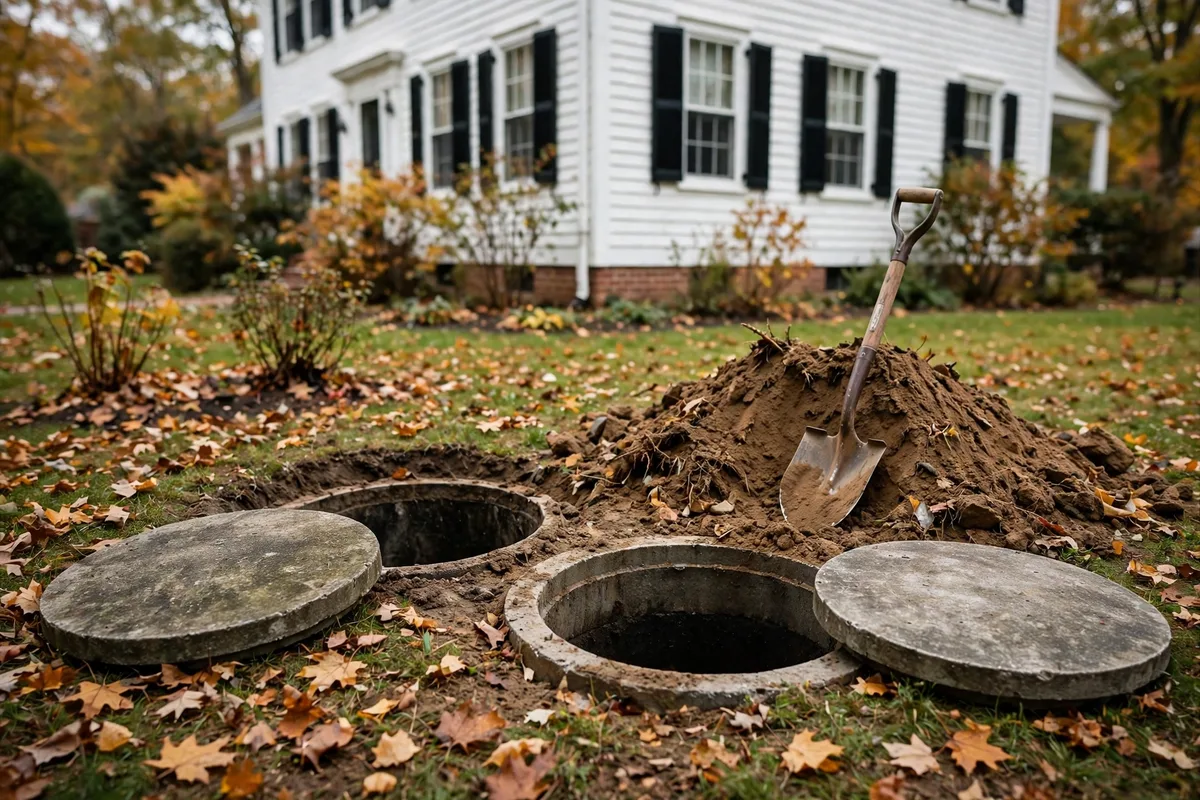
- Pumping the tanks. This is the step people try to skip, and it is the one that matters. A tank cannot be properly examined while it is full, and many health departments will not consider a report complete unless the tanks were pumped.
- Examining the components. Tank condition, baffles, inlet and outlet, distribution, and signs of trouble at the disposal field such as saturation, odor, or effluent near the surface.
- Reporting certain conditions. Some findings have to be reported to the health department on a set timeline, and if a cesspool is discovered the inspector has to report it in writing.
If you already know what to watch for, our septic warning signs post covers the symptoms that tend to show up before a system fails outright.
Reading the Report: What It Will Not Say
Here is a detail that catches buyers off guard. Under the NJDEP protocol, inspectors are not allowed to call a system “failed,” “malfunctioning,” or “non compliant.” Only the local health department or NJDEP can classify a system that way. So the report describes conditions in neutral language, and a serious problem can read as a calm sentence in the middle of a page. Read every observation, not just the summary.
Timing matters too. If the inspection happens within 48 hours of rain or snowmelt, the inspector has to note how the weather may have affected the results. Saturated ground can make a healthy field look stressed, or hide a problem that shows up later.
If the Inspection Finds a Problem
This is where the inspection pays for itself. Before you close:
- Get a real repair or replacement number from an installer, not a guess. Typical Central NJ ranges are $1,500 to $5,000 for tank repairs, $5,000 to $15,000 for leach field work, and $15,000 to $30,000+ for full replacement.
- Understand who has to fix it. Depending on the town, a malfunctioning system may need to be corrected by the buyer or the seller on an agreed timeline with the health department. Cesspools commonly must be replaced at transfer.
- Use the number in the negotiation. A documented quote is the difference between a vague concern and a price reduction or credit.
Replacement itself is a permitted, engineered process with its own timeline, which we walk through in when to replace your septic system. Knowing that timeline before closing keeps a surprise from turning into a move in date problem.
Get a Number Before You Close
Mannino Excavation installs and replaces septic systems across Monmouth, Middlesex, and Ocean County. If an inspection on a house you are buying turned up a problem, we can look at the system and give you a real repair or replacement quote to bring into the negotiation. (908) 670-7297, free estimates.
Frequently Asked Questions
Is a septic inspection required when buying a house in New Jersey?
There is no statewide requirement to inspect a septic system at sale, though some municipalities have their own rules. In practice, lenders and buyers commonly require one. Given that a full replacement often costs $15,000 to $30,000 or more, an inspection is one of the cheapest forms of protection in the whole transaction.
What does a NJ septic inspection include?
An inspection done for a property transfer has to follow the NJDEP protocol in N.J.A.C. 7:9A-12.6 and its Appendix E. A complete inspection includes pumping and examining all tanks, and many health departments will not consider a report complete without pumping. The inspector documents the condition of the system components and reports certain conditions to the health department.
Can a septic inspector say the system failed?
No. Under the NJDEP protocol, inspectors describe what they observe without using terms like malfunctioning, failure, or non compliant. Only the local health department or NJDEP can classify a system that way. Read the report carefully, because serious problems may be described in neutral language rather than flagged with an obvious label.
Does rain affect a septic inspection?
It can. The NJDEP protocol requires inspectors to note in writing how rain or snowmelt may have affected results if the inspection happens within 48 hours of a precipitation event. Saturated ground can make a healthy system look stressed or mask certain symptoms, so the timing of the inspection matters when you read the results.
What happens if the septic inspection finds a problem before closing?
Get a repair or replacement quote from an installer before you close. Depending on the town, the buyer or seller may be responsible for correcting a malfunction on an agreed timeline with the health department, and cesspools often must be replaced at transfer. A real number turns the inspection into leverage for a price reduction or credit.