Why Plow Damage Happens
After a real storm, everything near the driveway is buried. The operator is working off memory, a few landmarks, and whatever they can see sticking out of the snow. On a straight, curbed driveway that is easy. On a long rural drive, a driveway with no defined edge, or one that curves past lawn and landscaping, it is guesswork. The blade drifts a foot off the pavement, catches turf, and peels it back. Stack a few storms on top of each other and the edges of the lawn are torn up by March.
Almost all of it comes back to one thing: the operator cannot see where the driveway ends. Fix that and you fix most of the problem.
Stake the Driveway Before the Ground Freezes
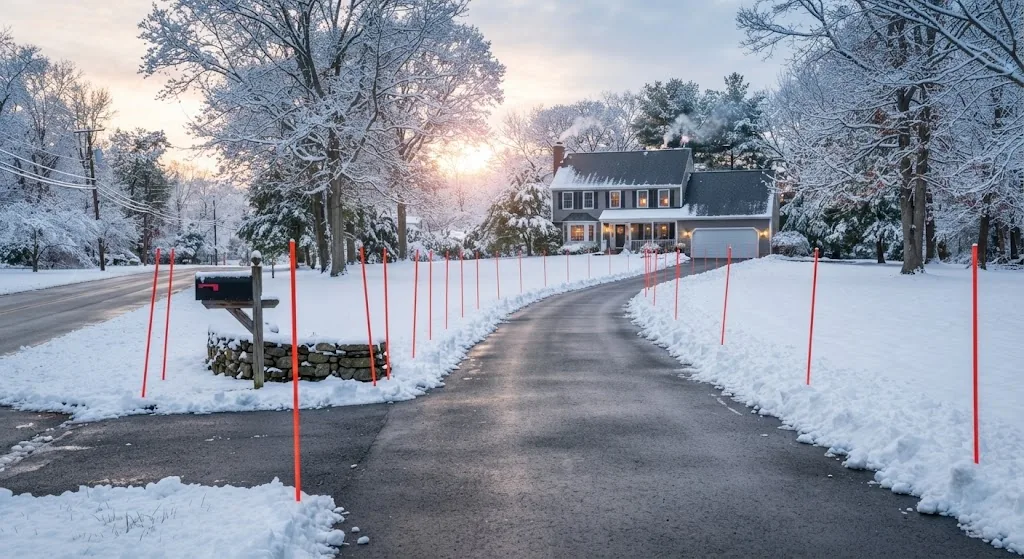
Driveway marker stakes are thin fiberglass or plastic rods, usually orange or reflective, that stand above the snow and outline the driveway. They cost a few dollars each and they are the single best thing you can do to protect your lawn this winter.
- Timing. Get them in before the ground freezes. In Central NJ that usually means November or early December. Frozen ground snaps stakes and makes them lean.
- Spacing. Roughly every 10 to 20 feet along both edges on straight runs, closer on curves and at any spot where the driveway changes width.
- Placement. Set stakes just off the pavement edge on the lawn side, not on the driveway itself, so the stake marks the true edge.
- Height. Taller is better. Short stakes vanish in a heavy storm or under the bank that builds up along the edge.
Mark the Hazards the Operator Cannot See
The edge is only part of it. Plenty of expensive damage comes from things sitting just off the driveway that nobody thinks about until a blade hits them:
- Sprinkler heads along the driveway or walkway
- Landscape lighting and low voltage wire runs
- Low walls, edging, and Belgian block curbing
- Drain inlets, cleanouts, and dry well lids
- The mailbox and any posts near the road
- Septic risers or lids anywhere near the plowing path
Give each one its own stake, ideally a different color than the edge markers. Better still, walk the driveway with your plow contractor before the first storm and point them out. It takes ten minutes and saves arguments in April.
What About Gravel Driveways?
Gravel driveways take the most abuse. A blade riding directly on loose stone scrapes the top layer and carries it to the edges with the snow, so every storm moves a little more stone into the lawn. Driveways that have lost their crown, or that have soft spots and potholes, lose the most because the blade digs into the low areas.
Two things help. First, get the driveway in shape before the season, with a proper crown and compacted stone, which we cover in our gravel driveway repair post. Second, how the snow is moved matters. A pickup blade can only push. Mannino runs a CAT skid steer that can lift and carry snow, and on gravel that means far less stone ends up in the grass.
Where Should the Snow Go?
The other half of protecting a property is deciding where the piles go before there are piles. Snow pushed onto the same strip of lawn all winter compacts the turf, and when it carries road salt it can burn the grass along the edge. Snow piled against a fence, shrubs, or a low wall can damage them under the weight. Pick a spot that can take it, ideally a part of the yard that slopes away from the house so meltwater does not head toward the foundation, and tell your plow contractor before the first storm.
Spring Repair for Plow Damage
Even with good prep, a long winter leaves some wear. Most of it is a quick fix once the ground thaws and dries:
- Rake stone back. Pull gravel out of the lawn and back onto the driveway before mowing season starts.
- Topsoil and seed. Fill scalped or rutted areas with screened topsoil, level it with the driveway edge, and seed once soil temperatures come up in spring.
- Reset curbing and edging. Belgian block or edging that got pushed out of line is easier to reset in spring than to leave for another winter.
If the same edge gets torn up every single winter, that is usually a grading problem, not a plowing problem. A lawn that sits lower than the driveway, or an edge with no defined line, will keep getting caught. Regrading the edge or adding a defined border fixes it permanently, and it is the kind of spring job we handle along with grading and driveway work.
Get on the Plow List
Mannino Excavation plows residential driveways across Central NJ, including long rural drives and shared driveways, with heavy equipment that lifts and relocates snow instead of just pushing it. If you are not on a route yet, our plow list post explains how priority works. Call (908) 670-7297 or request service through the snow plowing page.
Frequently Asked Questions
When should I put in driveway marker stakes?
Before the ground freezes, which in Central NJ usually means November or early December. Once the top few inches freeze solid, stakes are hard to push in and tend to snap or lean. Getting them in early also lets your plow contractor walk the driveway with you and flag anything that needs extra attention before the first storm.
How far apart should snow stakes be on a driveway?
A good rule is every 10 to 20 feet along both edges on straight runs, closer together on curves and anywhere the driveway widens or narrows. Add a stake at every hazard the operator cannot see, such as sprinkler heads, drain inlets, landscape lighting, low walls, and the mailbox. Taller stakes that stand well above expected snow depth work best.
Why does plowing push gravel into my lawn?
A blade that rides directly on loose stone scrapes the top layer and carries it to the edges with the snow. A driveway that has lost its crown or has soft spots loses more. Plowing with the blade raised slightly, or lifting snow with a skid steer instead of pushing it, leaves far more stone on the driveway.
Who pays for lawn damage from a snow plow?
It depends on the agreement you have with your plow contractor, so ask before the season starts. Many seasonal agreements cover obvious damage to marked items but not to things the operator could not see. Staking the edges and pointing out hazards ahead of time is the best way to avoid the question entirely.
How do I fix lawn edges torn up by a plow?
In spring, rake any gravel or debris back onto the driveway, fill the scalped areas with screened topsoil, and seed once the soil warms. If the same edge gets torn up every winter, the lawn may sit lower than the driveway or the edge may be undefined, and regrading or a defined edge solves it for good.