Why Homeowners Remove an In-Ground Pool
Most of the pools we take out have simply reached the end of the road. The liner's shot, the structure is cracking, the equipment is dated, and the cost of a full rehab doesn't make sense for how often the pool actually gets used. Add the ongoing expense — water, chemicals, electric, insurance, maintenance — and a lot of homeowners decide they'd rather have a safe, open, usable yard. That's exactly what this project was about.
Demolition — Draining, Liner, and Breaking Down the Shell
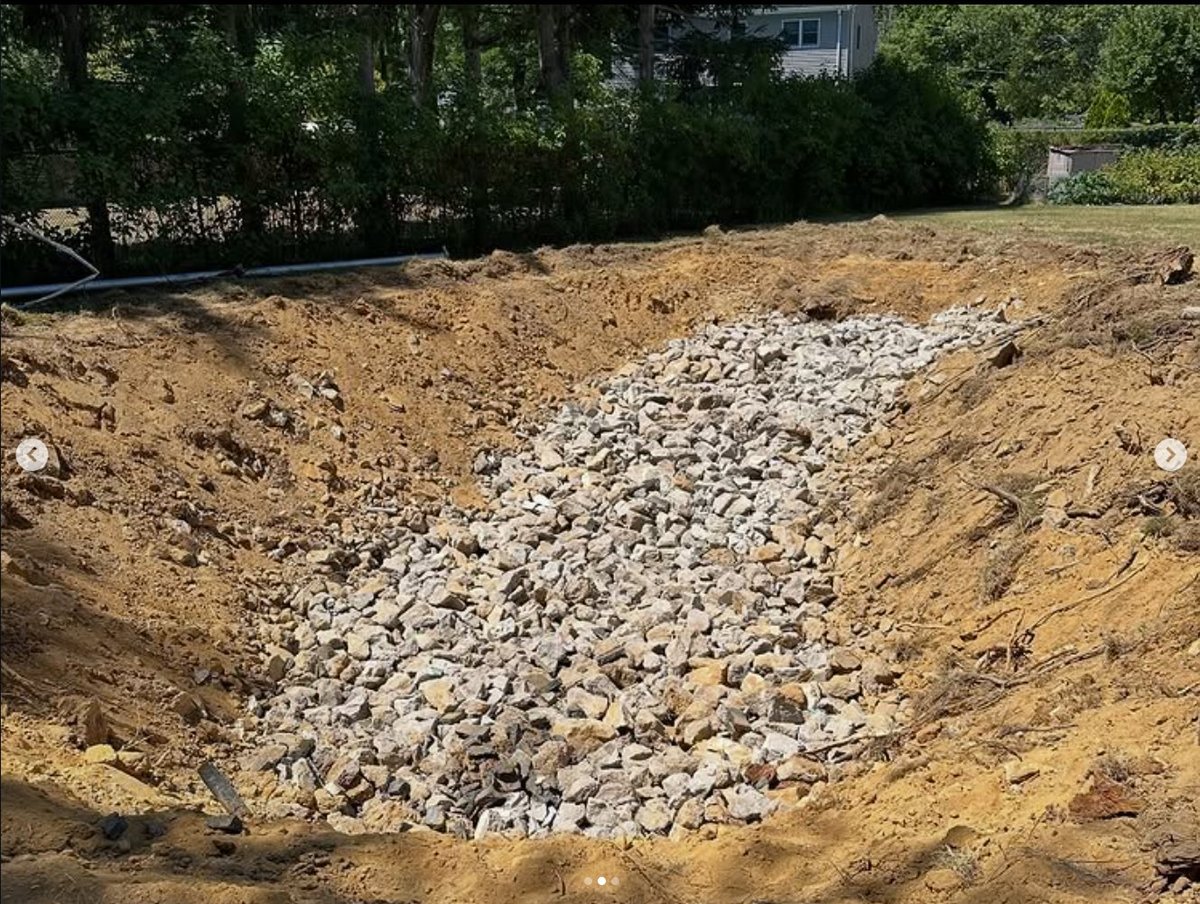
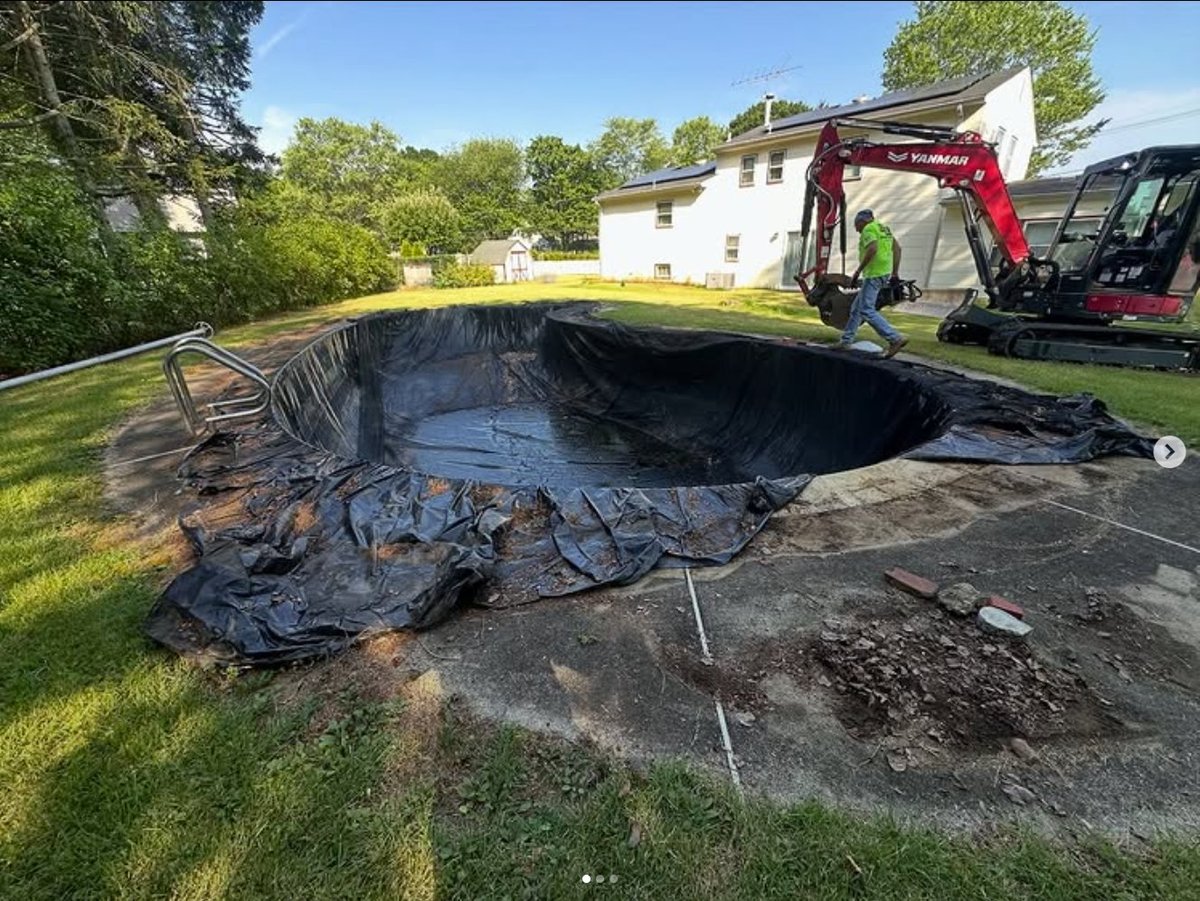
The job starts with draining the pool and pulling the liner, then breaking down the walls and floor of the shell. We bring in the excavator to break up the structure and pull out the coping, ladders, and any hardware. How far down we break the shell depends on whether it's a full or partial removal — more on that below. Everything that needs to leave the site gets hauled out, and the clean, broken concrete can often stay and become part of the fill.
Backfill — Clean Fill, Compacted in Lifts
This is the step that separates a demo that lasts from one that sinks. The cavity gets filled with clean fill — broken concrete from the shell at the bottom, then soil — placed in lifts and compacted as we go. Dumping fill in all at once is how you end up with a soft, sunken spot in the yard a year later. Compacting in layers gives you stable, settled ground that won't dish out over time.
If you're weighing this for your own yard, our guide on what to expect from a pool demolition walks through the process and permits in more detail.
Grading and Topsoil — Turning It Back Into Yard
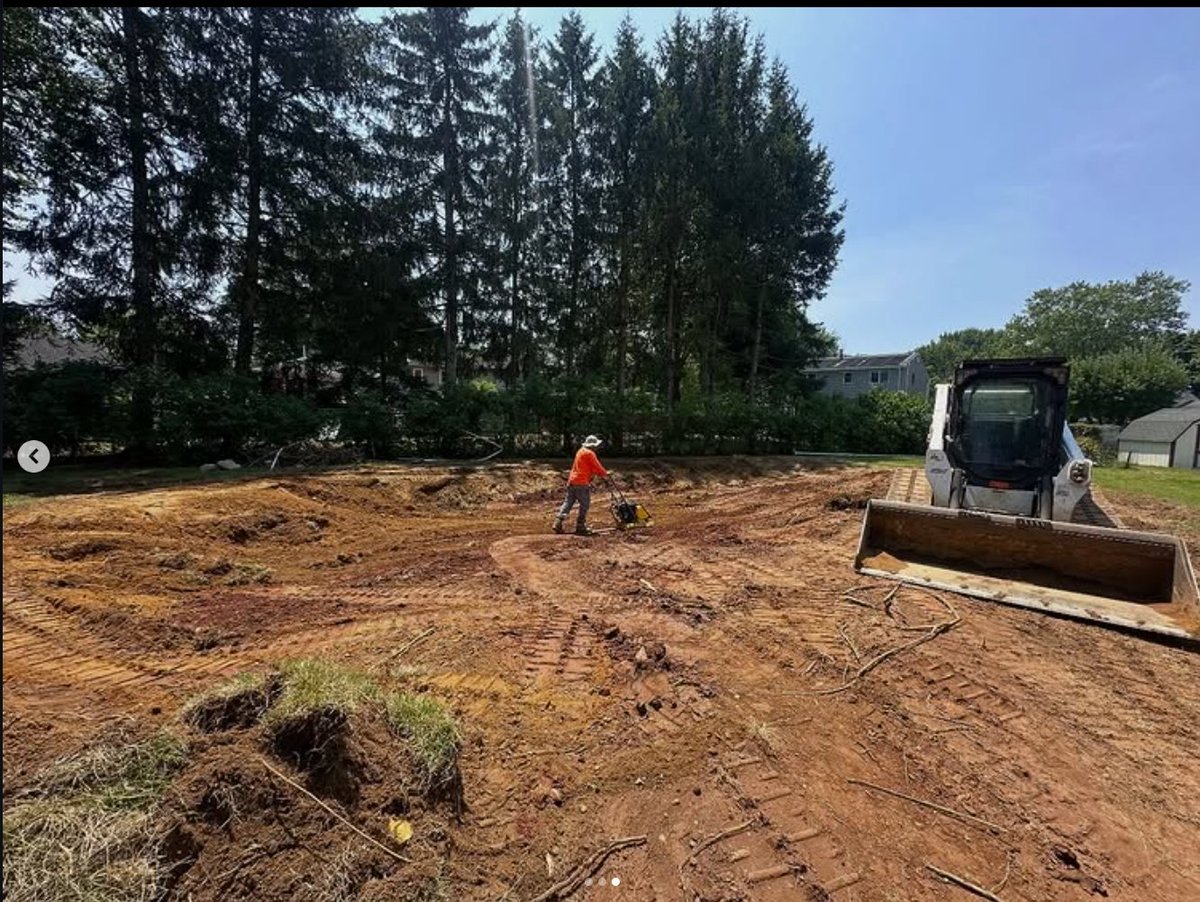
Once the fill is in and compacted, we grade the area to blend with the surrounding yard and pitch it so water drains away from the house, not toward it. Then fresh topsoil goes down so the space is ready to seed or sod. The end result is a flat, open, usable backyard with no sign there was ever a pool there.
Full Removal vs. Partial Removal
There are two ways to take out an in-ground pool, and it's worth knowing the difference:
Partial removal is the common, cost-effective option: the top of the shell is broken down, holes are punched in the bottom for drainage, and the cavity is backfilled and compacted. Full removal takes out the entire structure — every piece of concrete and steel — and is required in some situations or preferred if you plan to build on the spot later. Partial removal generally has to be disclosed to future buyers, so it's worth deciding up front based on your plans for the property. We'll walk you through which one makes sense for your yard.
About Pool Demolition in Central NJ
We handle pool removals across Monmouth, Ocean, and Central NJ — partial and full removals, backfill, grading, and full backyard restoration. If you've got an old in-ground pool you're done maintaining, we can take it out cleanly and hand you back a usable yard.
Thinking About Removing Your Pool?
Call (908) 670-7297 for a free estimate. We'll look at the pool, talk through full vs. partial removal, and give you an honest number.