The Lot Looks Great Until You Price the Clearing
A wooded half-acre lot in Howell or Jackson or Millstone looks like a steal on paper — land prices are lower than developed subdivisions, you can build what you want, and you get privacy from the trees. Then you get the clearing estimate and realize why the lot was cheaper.
Land clearing is one of those costs that surprises first-time builders because it's not a line item on most construction budget templates. Your builder's estimate covers the foundation, the framing, the mechanicals — it doesn't cover turning a wooded lot into a build-ready site. That's on you, and it needs to happen before anything else.
What "Clearing" Actually Means
Clearing a lot for new construction involves several distinct phases:
Tree removal. Not every tree comes down — your site plan will show which trees are in the building footprint, the driveway path, the septic area, and the utility runs. Trees outside those areas typically stay. For the ones that need to go, a tree service handles the felling and limbing. We handle the stump removal and root grubbing.
Brush clearing. The undergrowth between the trees — brush, saplings, vines, invasive species. The CAT 299 with a forestry head mulches this material in place, turning it into chips that decompose naturally. This is the most efficient way to clear undergrowth on a residential lot.
Stump grinding and root removal. Tree stumps left in the ground will interfere with foundation work, utility trenches, and grading. We grind stumps below grade and remove major root systems in the building footprint.
Debris removal. Everything that can't be mulched in place — large trunk sections, root balls, rocks — gets loaded onto dump trucks and hauled off-site.
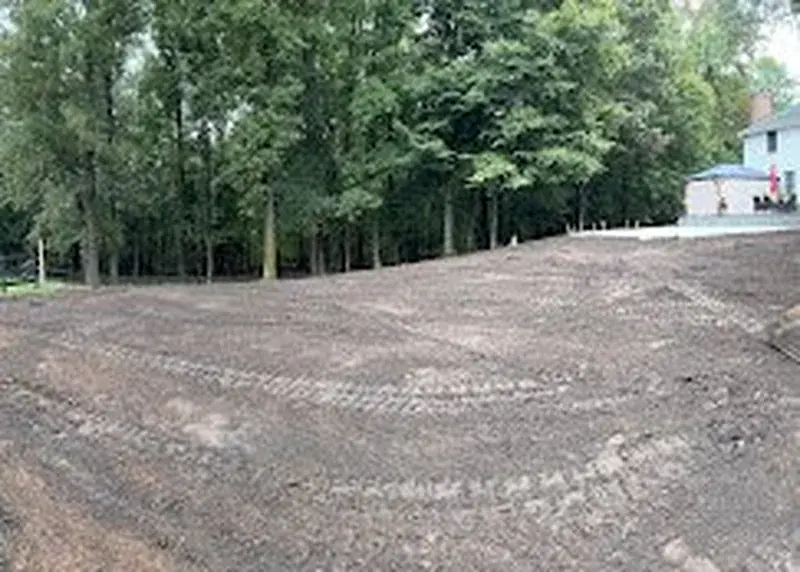
Rough grading. Once the site is clear, we rough-grade to the approximate contours needed for construction. This isn't the final grade — that comes after the house is built — but it establishes the drainage pattern and gives the foundation contractor a level working surface.
What It Costs
Land clearing costs depend almost entirely on three things: density, size, and what's growing there.
- Light brush (no large trees): $2,000–$4,000 per half acre
- Moderate (brush + scattered trees): $4,000–$8,000 per half acre
- Dense hardwood forest: $8,000–$15,000+ per half acre
Large trees (24"+ diameter) are significantly more expensive to remove and grind than small ones. A lot with ten 30-inch oaks costs much more to clear than a lot with fifty 6-inch saplings, even though the sapling lot looks "thicker."
Permits and Tree Ordinances
Some Central NJ towns have tree preservation ordinances that limit how many trees you can remove, especially above a certain diameter. Freehold Township, Colts Neck, and Holmdel all have regulations. Before clearing, check with your town's planning department. Clearing without required permits can result in fines and mandatory replanting.
Your site plan from the architect or builder should indicate which trees are being removed and which are preserved. We work from that plan.
Timing Matters
The best time to clear a lot in NJ is late fall through early spring — after leaves have dropped (so you can see what you're working with) and before nesting season. Some towns restrict clearing during bird nesting season (roughly April through August) if protected species are present. Winter clearing also means the ground is firm and equipment moves more efficiently.
Get Your Lot Assessed
Planning a new build? Call Frank at (908) 670-7297 for a free lot walk and clearing estimate. We'll tell you exactly what's involved and what it'll cost — before you close on the property if you want.