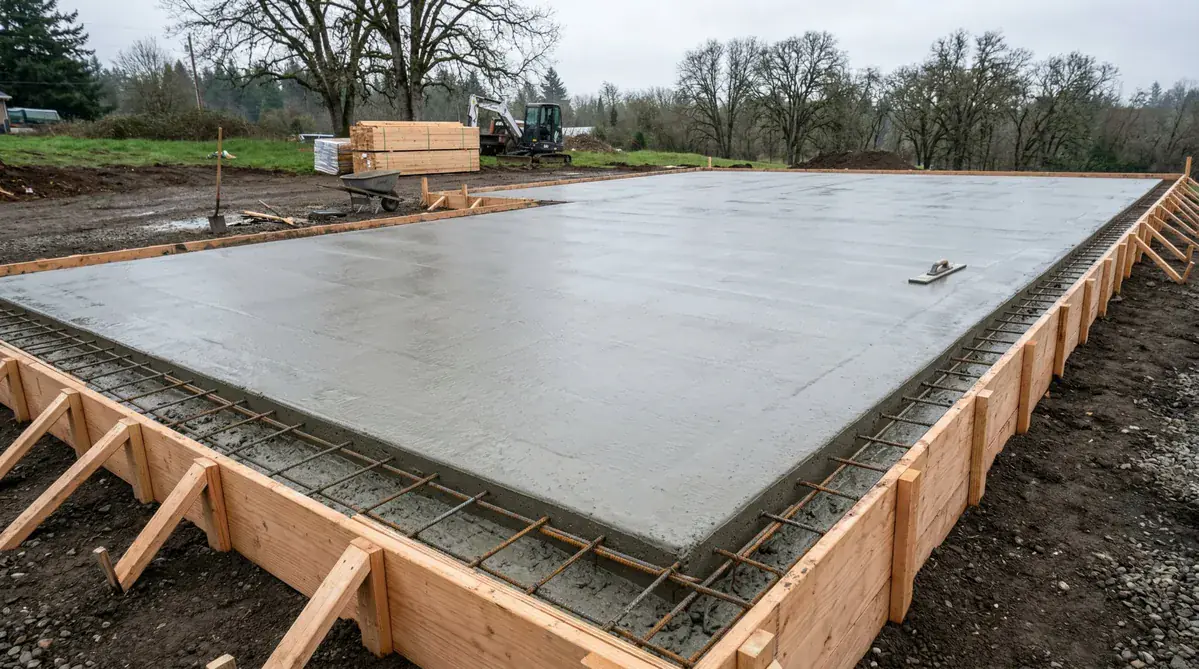
What Cold Actually Does to Concrete
Concrete does not dry, it cures: a chemical reaction between cement and water that generates its own heat and builds strength over days and weeks. Cold slows that reaction down, and freezing stops it in the worst possible way. If the water in fresh concrete freezes before the mix has built enough strength, the ice expands inside the forming structure and the damage is permanent. That slab or footing never reaches its designed strength no matter how nice the spring is.
That is why the rule of thumb is about sustained temperatures, the same threshold we flagged in our fall excavation season post: once daytime highs stop clearing 40 degrees reliably, every pour becomes a planned event instead of a routine one.
The Central NJ Calendar, Honestly
- Through late October: routine. Normal pours, normal curing, no special measures in a typical year. This is the season to want.
- Late October to mid November: watch the forecast. Most years this is still comfortable, but overnight lows start dipping. A contractor should be checking the 5 day forecast before scheduling, not just the day of the pour.
- Mid November into December: cold weather concreting. Very doable, but now it involves technique: heated or warmer mix water, accelerators in the mix, insulated curing blankets over the pour, and morning pours so the concrete gains early strength during the warmest hours. This adds some cost and it adds planning, and it is completely standard practice when done right.
- After mid December: special cases only. Ground frost enters the picture on top of air temperature, and pouring on or against frozen ground is its own problem. Emergency repairs and schedule critical structural work can still happen with full cold weather protocol. A patio cannot justify it.
Does the Type of Pour Change the Answer?
Yes, and this is the part most people miss. Footings and foundation walls are the most protected pours: they sit below grade where ground temperature is more stable, they are thicker masses that hold their curing heat, and blankets cover them easily. These push latest into the season, which is exactly why fall foundation projects work. Slabs, patios, sidewalks, and driveways are the most exposed: thin, flat, all surface area, losing heat to the air and the ground at once. Flatwork is what should beat the cold, both for curing and because finishing concrete in the cold slows the whole operation down.
What a Late Season Pour Should Include
If you are getting concrete quoted for November or later in Central NJ, the quote should mention how the pour will be protected, without you asking. Blankets, additives, pour timing, and what happens if the forecast turns are all signs the contractor has done this before. A cold weather pour done right is indistinguishable from a summer pour years later. A cold weather pour done casually is a crack pattern with your name on it. The same base and reinforcement rules from our commercial pad post apply all year: what is under and inside the concrete matters as much as the weather above it.
The Practical Takeaway
Want concrete this year? The comfortable path is booked by early October and poured by mid November. Mannino Excavation handles pads, aprons, sidewalks, footings, and full concrete scopes across Central NJ, and we will tell you straight if a pour should wait for spring. (908) 670-7297, free estimates.