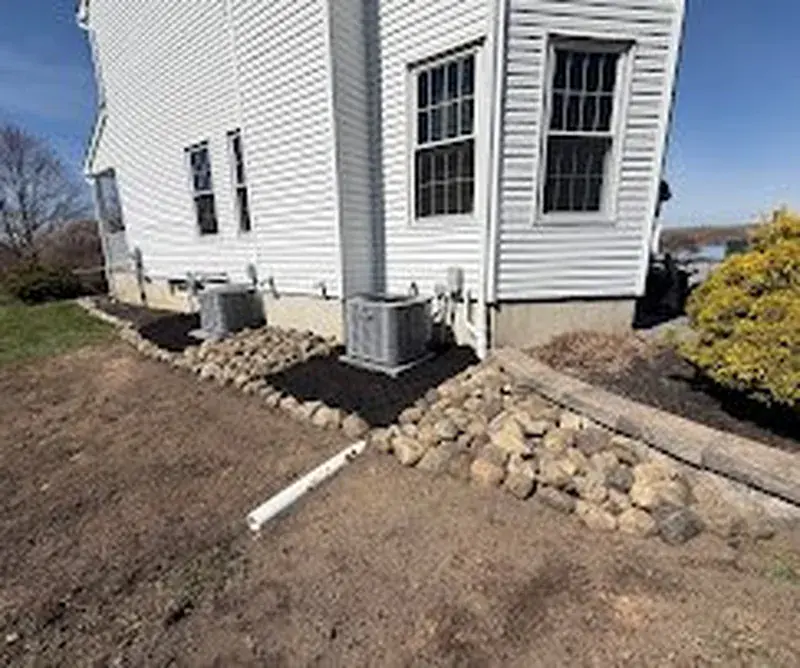
Grading Is Not a Line Item on the Builder's Estimate
Most new home builders will tell you they "handle everything." And they do — in the sense that they coordinate all the subcontractors. The framing crew, the electrician, the plumber, the roofer, the siding installer. But the site work — excavation, grading, drainage — is often subcontracted to whoever gave the builder the cheapest bid. And that's where problems start.
Bad grading doesn't show up on the final walk-through. The house looks great, the landscaping is fresh, and everything appears to drain away from the foundation. Two years later, the soil settles, the grade reverses, and water starts pooling against the foundation wall. Now you have a drainage problem on a two-year-old house.
What Good Grading Looks Like
There are two phases of grading on a new construction site:
Rough grading happens before the foundation is poured. The lot is cleared, topsoil is stripped and stockpiled, and the site is cut or filled to the approximate elevation. Drainage patterns are established so the construction site itself doesn't flood during the build. The foundation footing sits at the engineered elevation.
Finish grading happens after the house is built, utilities are in, and hardscape is complete. This is where the critical details live: the 5-6% slope away from the foundation, the drainage swales between properties, the smooth contours for lawn establishment, and the connection to the driveway and walkway grades.
What Goes Wrong
Backfill settlement. After the foundation is poured and backfilled, the disturbed soil settles. It can take 1-3 years to fully settle. If the finish grade is set too soon — before the backfill has consolidated — it'll sink and create a reverse slope that funnels water toward the house.
One-and-done grading. Some builders do one pass with a skid steer at the end of construction and call it done. That's not enough. Finish grading is precise work — establishing consistent slopes, smoothing the surface for sod or seed, and ensuring the drainage plan actually works as designed.
Ignoring the neighbors. Your property doesn't exist in isolation. Water that runs off your lot goes somewhere — onto the neighbor's property, into the street, into the storm system. Good grading accounts for the surrounding properties and doesn't create new problems for the people next door.
What to Ask Your Builder
- Who does your excavation and grading? Can I meet them?
- How many grading passes are included in the contract? One? Two?
- Will you re-grade the backfill zone after settlement (typically 12-18 months post-construction)?
- What's the drainage plan for the lot? Where does surface water go?
- Is finish grading done to a laser-level specification or by eye?
If the builder can't answer these questions — or if the answers are vague — you should vet and hire your own grading contractor. It costs you slightly more upfront but prevents the $5,000-$10,000 regrading job two years later.
We Work With Builders
A significant portion of our work is coordinating with general contractors and builders on new construction sites. We understand the construction sequence, we show up on time, and we do the grading right — so neither you nor the builder has to deal with callbacks.
Planning a new build? Have Frank look at the site before construction starts. Call (908) 670-7297.